


How Cegal made sustainability everybody’s problem – on purpose
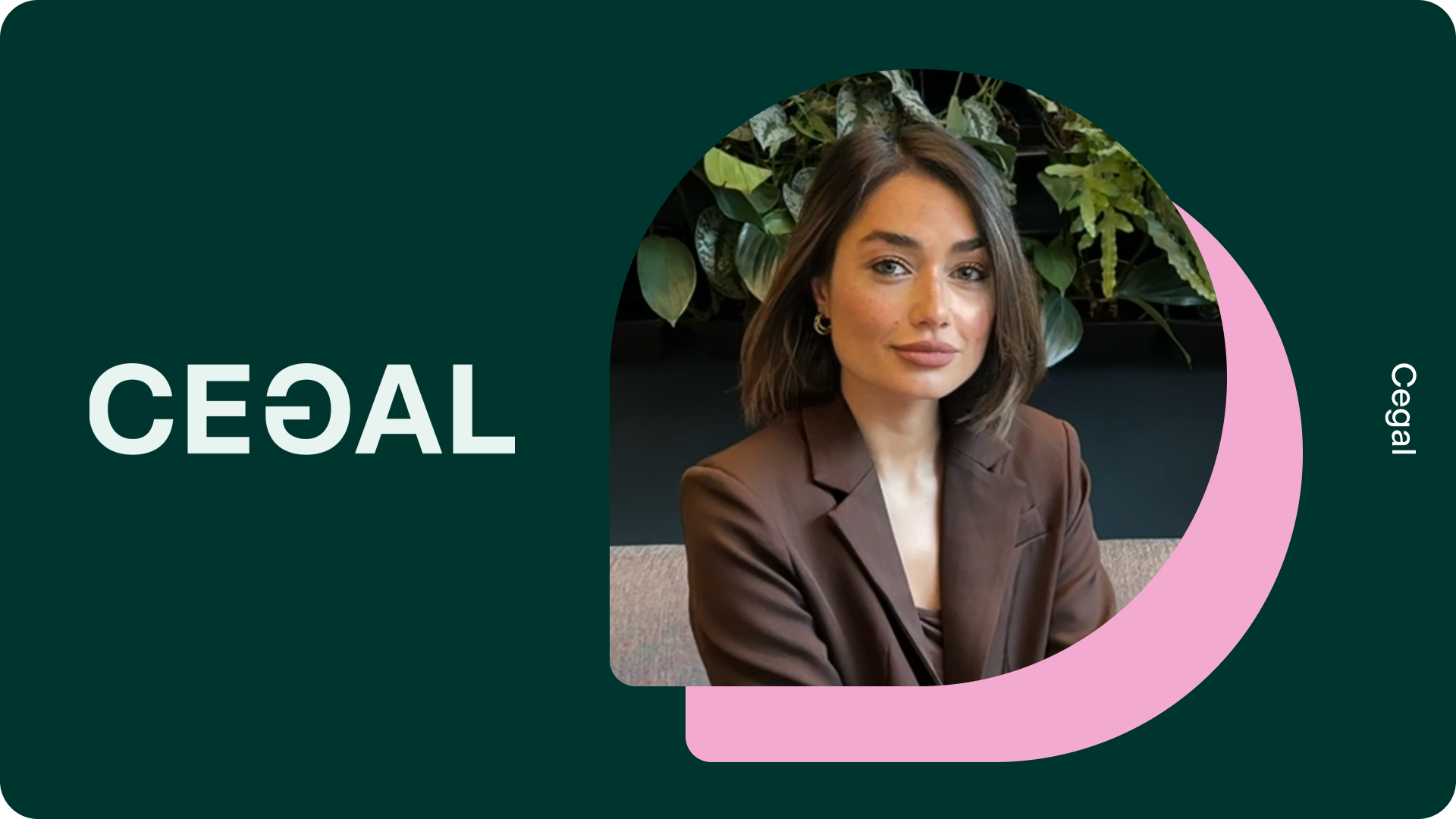
Celise Skaar leads sustainability by working directly with teams across the organization and supporting them in understanding how sustainability applies to their decisions, rather than building a separate structure around it. Responsibility does not sit with one function, but is distributed across the company, with each department accountable for its own outcomes.
This setup reflects how Cegal views sustainability. It is not a standalone initiative, but something embedded in how the business operates, delivers to customers, and makes decisions. The gap between ambition and reality is still real, and acknowledged. But integrating responsibility into the functions themselves, rather than managing it from the outside, is the only approach that actually holds over time.
For many companies, sustainability still sits in one of two places. It is either owned by a central function, or it lives in the annual report. In both cases, the result is the same. Sustainability exists, but it is not embedded in how the business operates or how decisions are made.
Cegal has taken a different approach. The focus has been on integrating sustainability into decision-making at both leadership and operational levels.
Bringing sustainability into the boardroom
One of the clearest shifts happens at the leadership level. Sustainability does not earn its place in the executive rooms through vision statements. It earns it by speaking the language leadership already uses every day, risk, opportunity, and what it means for the bottom line.
At Cegal, this means grounding discussions in concrete trade-offs. For example:
- Whether to continue sustainability reporting despite regulatory changes and associated costs
- How sustainability risks translate into financial exposure
- Where sustainability creates competitive advantage in customer-facing services
“Whether the conversation is with group executives or the board, the approach is the same: put down the vision statement. Be concrete about the risks, how likely, how serious, what they cost. Be equally concrete about where the opportunities are. Our role is to present the company’s context. Theirs is to decide. But what actually moves the room is being honest that this comes down to profit, to loss, and to the bottom line. That’s not a limitation. That’s just the truth. Work with the truth.”

“Be equally concrete about where the opportunities are. Our role is to present the company’s context. Theirs is to decide. But what actually moves the room is being honest that this comes down to profit, to loss, and to the bottom line.”
Celise Skaar, Global Sustainability Lead, Cegal
This framing shifts sustainability from an abstract topic to a business-critical input. It allows it to be discussed alongside other strategic priorities on equal terms.
Owning the narrative, not reacting to it
Getting sustainability into executive decisions is not only about data. It is about controlling the narrative.
In most organizations, sustainability still lives in the same mental drawer as reporting and compliance, necessary, administrative, slightly tedious. At Cegal, that framing was deliberately dismantled.
The clearest example: when regulatory changes removed the requirement to report on sustainability, the obvious move was to stop. The cost case was straightforward, less audit spend, fewer internal resources, one less obligation to carry.
Cegal kept reporting anyway.
Not out of habit, and not out of principle for its own sake. The decision was reframed from the ground up: “Reporting as transparency toward customers who are themselves under pressure to document their value chains. Reporting as market credibility, the kind that takes years to build and one quiet discontinuation to erode. Reporting as a signal that long-term commitment does not evaporate the moment it becomes optional.”
That reframe changed the entire shape of the leadership conversation. It moved the question from what does this cost us to what does stopping this cost us, and those are very different questions with very different answers.
From leadership alignment to organizational adoption
Executive alignment alone does not create change. Rather than restructuring, Celise Skaar worked with what already existed.
«Working as a Sustainability Lead, I haven’t really restructured anything. I’ve only worked with what was already there. That sounds modest. It isn’t. Working with what already exists requires a different kind of discipline than building something new, and it requires earning the trust of highly technical people who think sustainability is too fluffy to take seriously. That trust doesn’t come from having the right title. It comes from showing up with concrete answers to concrete problems.»

Cegal’s teams are highly specialized, with deep technical expertise. Many employees have advanced degrees and work within complex domains, thus have little patience for abstraction. A generic sustainability narrative would not resonate.
Instead, sustainability is translated into each team’s own language and reality, such as:
- Geoscience teams understanding their role in the energy transition, and the direct line from their existing expertise to offshore wind, carbon storage, and the infrastructure the broader transition actually requires.
- Technical teams linking their work to energy efficiency and digital infrastructure
- Commercial teams connecting sustainability to customer value and market shifts
Making sustainability practical
One of the main barriers to adoption is abstraction. At Cegal, sustainability was initially associated with emissions or seen as disconnected from daily work. Changing this required broadening the definition and making it actionable.
“Sustainability is not a framework. It is a way of thinking. And the difference matters, because frameworks sit on shelves. Mindsets show up in every meeting where actual decisions are made.”
Celise Skaar, Global Sustainability Lead, Cegal
In practice, this shows up in:
- Vendor decisions where sustainability factors into selection criteria
- Operational decisions where efficiency and long-term impact are considered
- Customer projects where services support the energy transition
When sustainability is understood this way, ownership becomes distributed. It is no longer driven by a central function but embedded in everyday decisions across the business.
Connecting internal governance to business value
Cegal’s approach separates sustainability into two connected areas:
- Governance: This includes reporting, risk management, and internal efficiency. It ensures the company meets requirements and understands its exposure.
- Solutions: This focuses on how Cegal creates value for customers. Particularly in a sector undergoing major transformation.
These two areas are closely linked. Risks and insights from governance inform how the company positions itself in the market.
A clear example is how competencies from oil and gas are applied to the energy transition. Rather than replacing capabilities, Cegal adapts them. Geological expertise, digital infrastructure, and domain knowledge are used in new contexts such as renewable energy.
This creates both continuity and new growth opportunities.

“Oil and gas is not a sustainable energy source. We are not going to pretend otherwise. But that is precisely where the position becomes interesting, the transformation is not happening in spite of this industry’s expertise. It is happening through it. Sometimes because of it. Customers operating across both legacy and emerging energy systems need partners who understand the full picture. Not just the clean parts of it. Cegal’s value is not in choosing a side. It is genuinely useful in complexity.”
The role of systems and structure
Embedding sustainability across many teams requires coordination.
At Cegal, systems support this by:
- Distributing responsibility across departments
- Guiding contributors through reporting requirements
- Reducing manual work and internal bottlenecks
The impact is tangible. Sustainability reporting is no longer dependent on one person coordinating everything manually. As Celise eloquently puts it:
“If LLMs can do a lot of the time-consuming work, it means that the humans that used to spend 500 hours on reporting now have 500 hours to actually use on actual change management.”
This shift frees up time for more strategic work and strengthens collaboration across the organization.
Core business outcome
What Cegal achieved by embedding sustainability into the business:
- Sustainability is part of strategic decision-making at executive level
- Ownership is distributed across expert teams rather than centralized
- Reporting is integrated into operations instead of treated as a separate process
- Time spent on manual reporting is reduced, freeing up resources for value creation
Key takeaways:
- Translate sustainability into financial impact to engage leadership
- Work with existing structures instead of defaulting to reorganization
- Make sustainability relevant to each team’s expertise
- Use systems to scale collaboration and reduce manual work
- Outcomes are not endpoints: Sustainability is a continuous process and even Cegal recognizes that it is a cyclical process of improvement, not a one-and-done exercise.
“There are probably people at Cegal who will read this article and think, wait, we have what? And that’s okay. This kind of work is hard precisely because it isn’t technical at its core. It’s cultural. It’s a shift in how people think, and every decision, every process, every tool roots back to that. So yes, I’m proud of the path we’ve chosen. But choosing to embed responsibility rather than just additional staff means things will move differently than if we had twenty sustainability experts pushing from the outside. Probably slower on paper. Hopefully deeper in practice.”
A different model for sustainability
What emerges from Cegal’s approach is a different way of operating.
- Sustainability is framed in business terms
- Leadership decisions are grounded in financial impact
- Ownership is distributed across the organization
- Existing competencies are leveraged rather than replaced
- Systems support coordination without replacing accountability
For companies facing increasing regulatory pressure and stakeholder expectations, the challenge is not only to report on sustainability, but to integrate it.
Cegal’s approach shows that this does not require a complete transformation. It requires a shift in how sustainability is understood, communicated, and applied across the business.
Where software empowers collaboration
Where Position Green was instrumental to this was in providing a single source of truth and collaboration for the Cegal team as they were unifying their organizational capabilities.
Across each of our different products, Position Green allows collaborators to seamlessly upload, share, and traceback data submissions between departments, as well as from suppliers. This allows you to not only empower your entire organization to align their efforts with sustainability, but to save time and effort collating this information for use both in compliance activities and strategic opportunities.
If you want to learn how it cam empower your sustainability efforts for the year, we would love to chat.
Chat with usStay up to date with the latest ESG-trends.
About Cegal
Cegal positions itself as an enabler of the digital future in energy, combining deep domain expertise with technology to support both traditional and emerging sectors.
As described by the company: “We write digital success stories. We deliver leading industry software and consulting and mission critical cloud solutions and in many ways we see ourselves as an enabler in shaping much of the digital future that the energy sector is going through.”