Making return on investment with your sustainability: How ESG is transforming industries
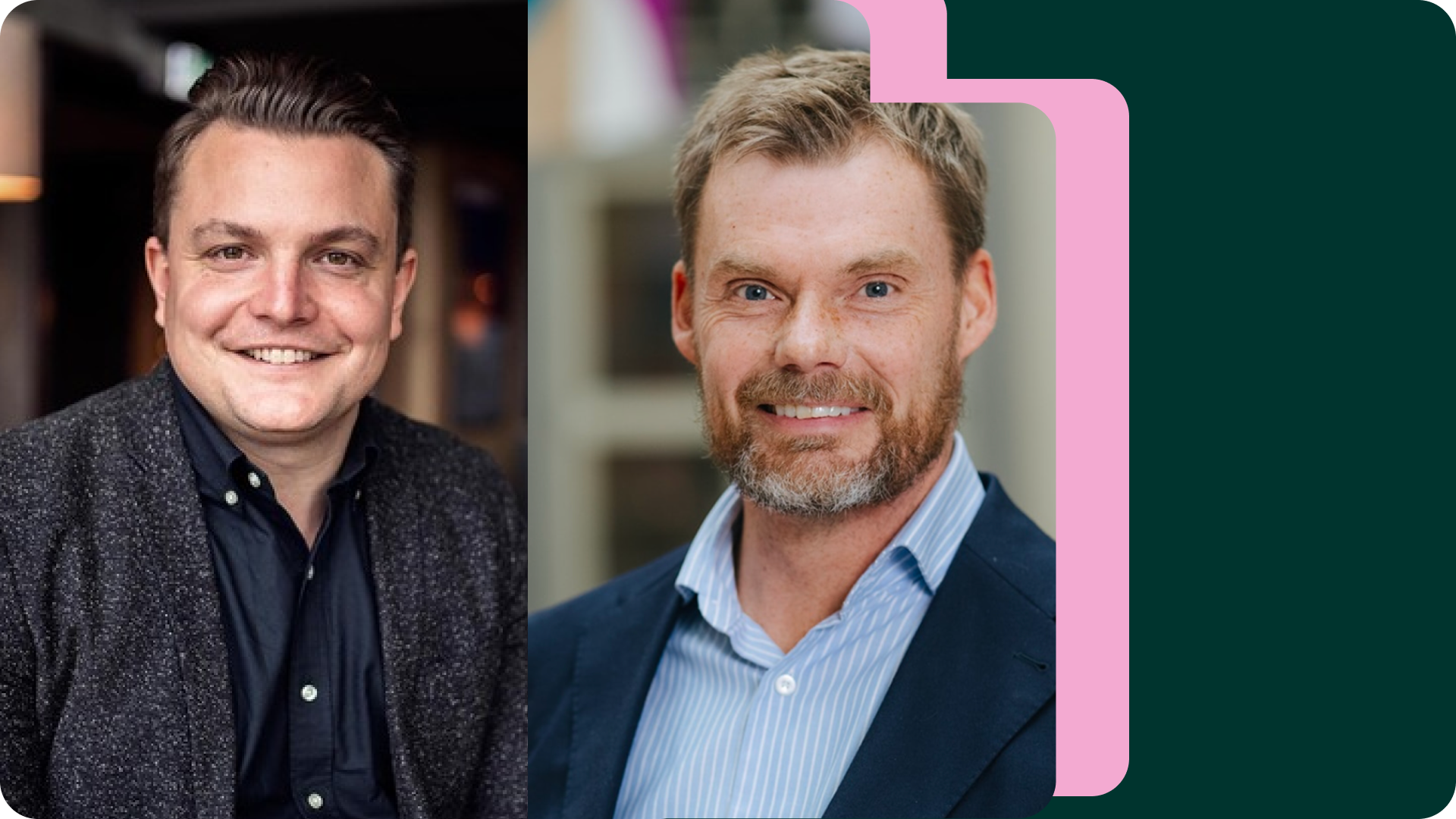
“Businesses that succeed in connecting sustainability to their profitability will have a clear advantage”, states Tony Christensen. In the last few years, sustainability has gone from being perceived as an expense to a strategic investment, something further supported by Rickard Sandberg, Head of the Center for Data Analytics at the Stockholm School of Economics. He clarifies that frameworks like CSRD, as well as increased requirements from investors aren’t the sole drivers of this, it’s also the realization that environmental initiatives can generate direct, economic value.
It can be seen in everything from reduced expenses and risk exposure, to increased access to capital. Banks and asset managers take ESG-data into consideration seriously, both in their credit and investment decisions.
Furthermore, Rickard underlines that businesses who have yet to integrate sustainability into their business models are taking an unnecessary risk, as not understanding how sustainability affects both revenue streams and bottom lines can, in practice, lend itself to risk exposure down the line.

“Businesses which can demonstrate the state of their sustainability gain a significant advantage in attracting capital.”
Rickard Sandberg, Head of the Center for Data Analytics at the Stockholm School of Economics
The importance of measuring business impacts
Tony Christensen further clarifies that the importance of sustainability isn’t merely to measure emissions or align to compliance frameworks, it’s about the realities of business practices themselves.
When you can show that your sustainability strategy drives revenue or reduces risk, it changes the conversation on an operative level as much as in the boardroom. But to succeed, you need both data, analysis and a clear path forward. Rickard highlights that many businesses are now integrating ESG data into their business models and leverage them as decision-making machines. By applying methods such as carbon shadow pricing and ascribing value to carbon itself, these businesses gain a far better idea of how they make gains from their sustainability investments.
One example is from industrial businesses, who systematically measure their energy savings, not only to reduce emissions but the associated costs by as much as 10%.
From strategy to business reality
To give your business a concrete view of the returns you could make from sustainability initiatives, Position Green has created a free ROI calculator which allows you to estimate returns from specific sustainability projects. You can input your own numbers, timelines, costs avoided, and new income created. What makes this invaluable is that it puts tangible gains and losses within the scope of your business.

Tony Christensen goes on further to state that when you can show the numbers resulting from your sustainability, it stops being a side project, and turns into a natural part of your business processes. The shift this is creating in the business world has only just begun. We stand at the beginning of a new era where sustainability becomes as self-evident in its value to a business as cashflow and growth, which is why those businesses who can turn risk insights into action and put a price on their resilience will be the ones who will lead the market going forward. Sustainability is no longer a soft value, it is hard economics.
Take your first steps towards competitive sustainability
As we already mentioned above, there’s no better way to catalyze action in your business than by making your returns and risks from sustainability real, as well as achievable. Which is why you shouldn’t miss the chance to access the ROI calculator yourself. Model your gains across custom timelines, specific metrics, and honest returns.
It’s one click away, no sign-up needed. You can see instantly potential financial returns, payback periods, and emissions impact of sustainability investments based on your inputs and real business drivers.
Try ROI calculatorStay up to date with the latest ESG-trends.
About our authors
Rickard Sandberg is an Associate Professor in the Department of Entrepreneurship, Innovation and Technology at the Stockholm School of Economics (SSE), where he also serves as Head of the Center for Data Analytics within the House of Innovation. He has been an active researcher for more than two decades, recognized as one of Sweden’s leading experts in statistical and econometric analysis, as well as sustainability.